Fast dispatch via Prompt XPress
Fast dispatch via PickMe
Fast dispatch via Koombiyo Delivery
Pay with KOKO — Buy now, pay later
Monthly installments on orders over Rs. 10,000
Island-wide delivery
Fast dispatch via Prompt XPress
Fast dispatch via PickMe
Fast dispatch via Koombiyo Delivery
Pay with KOKO — Buy now, pay later
Monthly installments on orders over Rs. 10,000
Island-wide delivery
Small businesses in Sri Lanka can choose from various binding methods including comb, wire, coil, and thermal systems. Manual comb machines offer the most cost-effective solution with reusable consumables. Professional needs may require wire binding for a flat finish or electric coil machines for high-volume, durable document production.
Selection depends on punching capacity, binding volume, and desired presentation style. While comb binding is a versatile choice for internal manuals, thermal and wire options provide more refined finishes for client-facing materials. Local pricing and availability help businesses match equipment to specific budgetary and functional requirements.
Which binding machine should a small business buy?
For most Sri Lankan small businesses, a manual comb binding machine (such as the S308 at LKR 12,400) is the practical starting point: combs are reusable, the consumables are the cheapest, and a single machine handles everyday reports, proposals and manuals. If you bind frequently or want a more permanent, professional look, step up to wire binding (T318), and if you handle high volumes choose an electric coil machine (C9027) or an all-in-one 3:1 unit (ST800). The right choice comes down to three things: your binding method, the sheet capacity you need, and how often you bind.
This guide explains how the main binding methods differ, what the technical specs actually mean, and what each machine sold at Officestationery.lk costs, so you can match a machine to your real workload.
Why binding machines still matter for offices
Binding documents in-house removes the cost and turnaround delay of outsourcing to a print shop, and it lets you produce a polished, organised finish on demand. Demand for the equipment remains steady worldwide. According to Mordor Intelligence, the global binding machines market was valued at USD 1.39 billion in 2025 and is projected to reach USD 1.98 billion by 2031, growing at a 6.11% CAGR over 2026-2031, with Asia-Pacific the fastest-growing region at a 7.12% CAGR.
“The binding machines market size is expected to increase from USD 1.39 billion in 2025 to USD 1.47 billion in 2026 and reach USD 1.98 billion by 2031, growing at a CAGR of 6.11% over 2026-2031.”
The same research notes that while routine office comb-binding volumes are slowing, demand is shifting toward higher-value uses such as legal and presentation binding, which is exactly where a quality in-house machine pays off for a small firm.
Binding methods explained: comb, wire, coil and thermal
Comb binding
Comb binding uses a plastic spine threaded through a row of rectangular slots. As Wikipedia notes, comb spines have 19 rings for US Letter size or 21 rings for A4 size — and because Sri Lanka standardises on A4, you will normally work with the 21-hole pattern. Combs are the cheapest consumable, are reusable, and let you open the spine to add or remove pages, which makes them ideal for draft documents and manuals that change.
Wire binding
Twin-loop wire binding gives a crisp, professional finish and lets documents lie flat. It comes in two common pitches: 3:1 pitch punches 3 holes per inch and suits smaller documents (with spines from about 4.8 mm to 14 mm), while 2:1 pitch punches 2 holes per inch and is used with larger spines from 16 mm to 32 mm in diameter for thicker books. Wire is not reusable, so it costs more per document than comb.
Coil and thermal binding
Coil (spiral) binding uses a single plastic coil and is extremely durable — pages can be turned a full 360 degrees, which is why it is popular for notebooks and field manuals. Thermal binding skips punching entirely: pages are glued into a pre-coated cover using heat, giving a clean perfect-bound look with no visible holes. Each suits a different priority — coil for durability and frequent handling, thermal for the most refined presentation.
How to choose: the specs that matter
Punching capacity vs binding capacity: A machine punches only a few sheets per pass but can bind a thick stack. Comb spines scale up to about 425 sheets at a 51 mm (2-inch) diameter, so check both numbers.
Manual vs electric: Manual machines are cheaper and fine for occasional use; electric punching saves effort and time at higher volumes.
Consumable cost: Reusable plastic combs are the most economical; wire and thermal covers cost more per document.
Paper weight: Standard office paper is around 80 gsm; heavier covers need a machine rated for thicker stock.
Binding machines available at Officestationery.lk
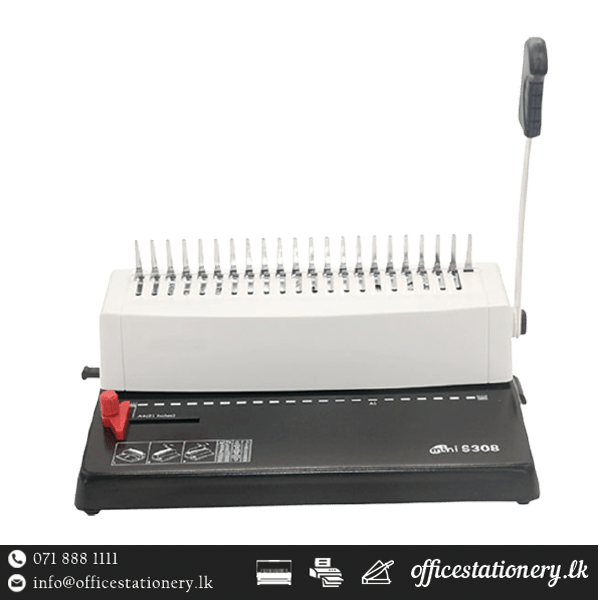
S308 Comb Binding Machine — LKR 12,400
A lightweight manual comb machine that binds up to 250 sheets. The most budget-friendly option, ideal for businesses with occasional binding needs and changeable documents.
T318 Wire Binding Machine — LKR 19,800
A manual twin-loop wire machine that binds up to 120 sheets, producing a professional, lie-flat finish. Best for client-facing reports and presentations.
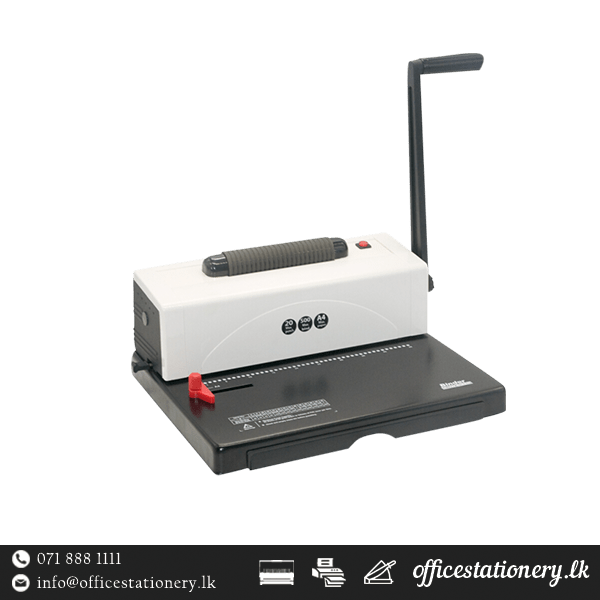
C9027 Coil Binding Machine — LKR 35,000
An electric coil machine with an electric coil inserter, binding up to 500 sheets. Suited to businesses handling large-volume binding frequently and wanting durable, 360-degree-opening documents.
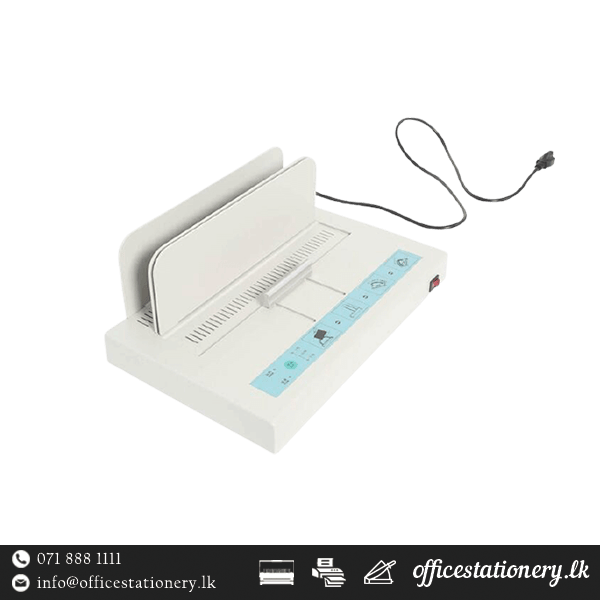
Thermal Binding Machine — LKR 25,000
Handles up to 500 sheets with automatic document-thickness detection, producing a clean, glued finish with no punch holes — the most refined presentation option.
An all-in-one unit supporting comb (up to 450 sheets), 3:1 wire (up to 120 sheets) and press strip binding. The best fit for businesses with higher and more varied binding demands.
You can browse and order these binding machines online at officestationery.lk. To order by phone, call 071 888 1112 or email [email protected]. For in-person shopping, the store is at No: 51/1, St. Michael’s Road, Colombo – 03. For background on choosing the right comb machine, see our guide to comb binding machines.
Frequently asked questions
Which binding machine is best for a small business on a budget?
A manual comb binding machine such as the S308 (LKR 12,400) is the most economical, because plastic combs are reusable and the cheapest consumable, and it handles everyday reports and proposals.
What is the difference between comb and wire binding?
Comb binding uses a reusable plastic spine (19 rings for US Letter, 21 rings for A4) and lets you add or remove pages. Wire binding uses non-reusable twin-loop wire for a crisper, lie-flat finish but costs more per document.
What does 3:1 pitch mean in wire binding?
3:1 pitch means 3 holes are punched per inch, which suits smaller documents (spines roughly 4.8 mm to 14 mm). 2:1 pitch punches 2 holes per inch and is used with larger spines from 16 mm to 32 mm for thicker books.
How many sheets can a binding machine hold?
It depends on the spine, not just the machine. Comb spines scale up to about 425 sheets at a 51 mm diameter. Among the machines listed here, capacity ranges from 120 to 500 sheets.
Is comb binding suitable for A4 documents used in Sri Lanka?
Yes. A4 is the standard size in Sri Lanka, and A4 comb spines use a 21-ring pattern, so any A4-compatible comb binding machine will work for typical local office documents.
 Fast dispatch via Prompt XPress
 Fast dispatch via PickMe
 Fast dispatch via Koombiyo Delivery
 Pay with KOKO — Buy now, pay later
 Monthly installments on orders over Rs. 10,000
 Island-wide delivery