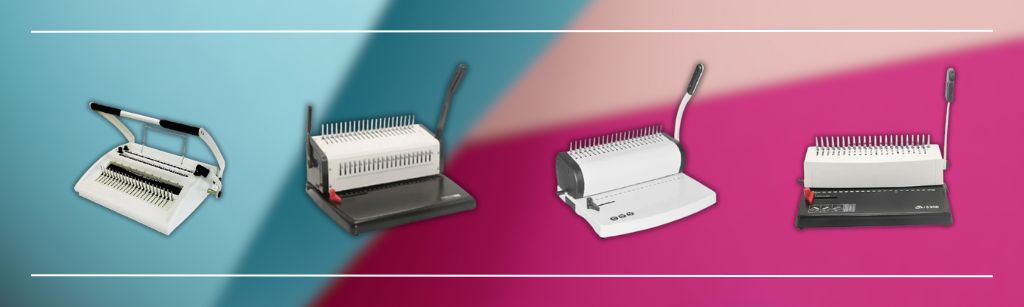
What is a comb binding machine?
A comb binding machine is a desktop device that binds loose pages into a book by punching a row of rectangular holes along one edge and threading a flexible plastic comb through them. The same machine handles both jobs: a punching mechanism perforates the paper, and a comb-opening lever spreads the comb’s teeth so they slot into the holes and then spring closed. Comb binding is favoured for its low running cost, easy editing, and ability to bind anything from a 5-page handout to a thick manual.
According to Wikipedia, “comb binding (sometimes referred to as ‘cerlox’ or ‘surelox’ binding) is one of many ways to bind pages together into a book.” Plastic combs are made in two standard formats: a 21-ring comb for A4 and a 19-ring comb for US Letter, which is why most machines sold in Sri Lanka punch 21 holes for the common A4 page.
How does a comb binding machine work?
The process has four simple steps, and most documents can be bound in under a minute once you are familiar with the machine:
- Punch: Insert a small stack of sheets into the throat and press the handle to punch the row of rectangular holes. Entry-level manual machines typically punch 20-25 sheets of 80 gsm paper per pass, so a thick document is punched in batches.
- Open the comb: Place the plastic comb on the comb-opening teeth and pull the lever to spread the rings apart.
- Load the pages: Hang the punched sheets onto the open comb rings, front cover first, back cover last.
- Release: Return the lever; the rings close into a circle and the book is bound. Because the comb can be reopened at any time, you can add, remove, or reorder pages later.
Key specifications to compare before you buy
Comb binding machines are rated by two different capacities, and confusing them is the most common buying mistake. Use these specs to match a machine to your real workload.
Punch capacity vs. binding capacity
Punch capacity is how many sheets you can perforate in one pull of the handle; binding capacity is the maximum thickness of finished document the largest comb can hold. For example, the manual GBC CombBind C340 punches up to 25 sheets of 80 gsm paper at a time but binds documents up to 450 sheets thick using combs of up to 51 mm diameter. Heavier electric models such as the GBC CombBind C800PRO punch a similar 25 sheets per cycle while binding up to 500 sheets.
Manual vs. electric
- Manual machines are the most affordable and need no power; ideal for homes, classrooms, and small offices binding a few documents a day.
- Electric machines automate the punch, reducing fatigue for print rooms and offices that bind in volume.
Other features worth checking
- Adjustable edge guide and depth margin for consistent, centred punching.
- Disengageable punch pins so you can punch A5 or other short sheets cleanly.
- A built-in waste tray for the paper chads.
Comb binding vs. other binding methods
- Comb vs. spiral (coil): Spiral coils let pages fold fully back and lie flat, while comb rings can be reopened to edit the document. Comb is generally the cheaper consumable.
- Comb vs. wire (twin-loop): Wire binding gives a more durable, premium finish but is permanent once crimped; comb wins on reusability and budget.
- Comb vs. thermal: Thermal binding produces a clean book-style spine but cannot be reopened to swap pages.
A growing market
Document binding remains a steady global business. Market analysts at Mordor Intelligence size and forecast the category as follows:
“The binding machines market size is expected to increase from USD 1.39 billion in 2025 to USD 1.47 billion in 2026 and reach USD 1.98 billion by 2031, growing at a CAGR of 6.11% over 2026-2031.”
Mordor Intelligence, Binding Machines Market
That steady 6.11% CAGR reflects continuing demand from offices, schools, and print shops, which keeps spare combs and parts widely available for the machines you buy today.
Recommended comb binding machines
Where to buy a comb binding machine in Sri Lanka
You can order a comb binding machine, plus spare A4 plastic combs, online at Officestationery.lk for delivery across Sri Lanka. We stock a range of machines and accessories to match different punch and binding capacities.
If you prefer to see a machine before buying, visit our physical store at No: 51/1, St. Michael’s Road, Colombo – 03. Our team can help you match a machine to your typical document size and volume.
Frequently asked questions
-
How many holes does a comb binding machine punch on an A4 page?
Comb binding machines punch 21 rectangular holes along the edge of an A4 sheet, matching the 21 rings on a standard A4 plastic comb. US Letter pages use a 19-hole/19-ring format instead.
-
How thick a document can a comb binding machine bind?
Capacity depends on the largest comb the machine accepts. A typical manual machine such as the GBC CombBind C340 binds documents up to 450 sheets thick using combs of up to 51 mm diameter, while it punches about 25 sheets of 80 gsm paper per pass.
-
Can you reuse a comb binding spine?
Yes. The comb’s rings reopen on the machine’s comb-opener, so you can add, remove, or reorder pages and re-close the same comb. Repeated openings can eventually weaken a plastic comb, but light editing is fine.
-
Is comb or spiral binding better?
Comb binding is reusable and usually the cheaper consumable, making it ideal for documents you may edit. Spiral (coil) binding lets pages fold all the way back and lie flat, which suits notebooks and manuals used hands-free.
-
What is the difference between punch capacity and binding capacity?
Punch capacity is how many sheets you can perforate in one pull of the handle (often 20-25 sheets). Binding capacity is the maximum thickness of finished document the largest comb can hold, which can be 450 sheets or more.
 Fast dispatch via Prompt XPress
 Fast dispatch via PickMe
 Fast dispatch via Koombiyo Delivery
 Pay with KOKO — Buy now, pay later
 Monthly installments on orders over Rs. 10,000
 Island-wide delivery